
Chest pain is one of the most common reasons people end up in the emergency department (ED). But here’s the problem: up to 90% of those suspected heart attacks turn out not to be acute coronary syndrome (ACS). That means crowded waiting rooms, anxious patients, expensive tests – and stretched healthcare resources.
A new randomised clinical trial published in the European Heart Journal (Camaro et al., 2023) asked a simple but powerful question: What if paramedics could rule out a heart attack before even reaching the hospital?
The ARTICA Trial: Testing Troponin in the Field
The trial enrolled 863 patients in the Netherlands with low-risk chest pain (HEART score =3). They were randomised into two groups:
- Standard care: transported to the ED for evaluation.
- Pre-hospital strategy: paramedics measured troponin using a point-of-care (POC) device in the ambulance. If the result was low, patients could safely avoid ED transfer and continue care via their GP.
What is the HEART Score?
The HEART score is a simple and well-validated tool used to assess chest pain patients. It considers five factors:
- History (how suspicious the symptoms are)
- ECG changes
- Age
- Risk factors (such as smoking, diabetes, or hypertension)
- Troponin level
Scores range from 0 to 10. A score of less than or equal to 3 identifies low-risk patients who are very unlikely to suffer a major cardiac event.
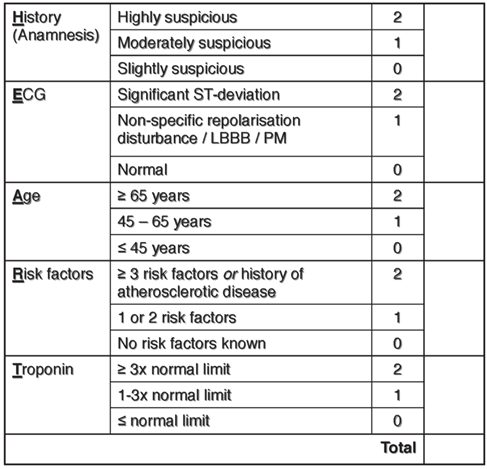
The HEART score card – A Dutch paramedic explained, how she uses this exact card for all chest pain patients. The T section can be modified: >60 ng/L = 2, 40-60 ng/L = 1, <40 ng/L = 0.
By combining this risk score with a portable troponin test, ambulance crews can make safe, evidence-based decisions before the patient even reaches hospital doors.
The Results
- Healthcare costs dropped by an average of €611 per patient with the pre-hospital strategy.
- Major adverse cardiac events (MACE) at 30 days were almost identical: 3.9% vs. 3.7%.
- In patients ruled out for ACS, the risk of a cardiac event was very low (0.5% vs. 1.0%).
Put simply: paramedics with a portable troponin test could save money, ease ED overcrowding, and deliver equally safe outcomes for low-risk patients.
The authors estimate that the added value of this pre-hospital rule-out strategy on the Dutch population alone would amount to €48 million per year.
Why This Matters
- For patients: less unnecessary hospital time, faster reassurance, and care closer to home.
- For paramedics: a stronger role in frontline triage, using tools once reserved for hospitals.
- For healthcare systems: significant cost savings and reduced strain on overcrowded EDs.
Looking Ahead
This study highlights how shifting diagnostics into the pre-hospital space can transform patient flow. With rising ED overcrowding worldwide, strategies like these may soon move from trial to standard practice – provided healthcare systems invest in training, devices, and integration with existing care pathways.
Take-home message: Sometimes, the smartest place to test for a heart attack isn’t the hospital – it’s the back of an ambulance.